Later this week, I’ll be reviewing Beast Academy, an offbeat math curriculum for grades 3-5. (You’ll notice the cover features cartoon monsters!) My son uses Beast Academy and loves it, but it has no teacher’s guide or suggested schedules. I tend to be a super-scheduled box-checker, but it has been so freeing to use a curriculum without any suggested pacing or lesson structure. I try to follow my son’s lead and work with him for as long as he has stamina and interest. We usually spend fifteen to twenty minutes working together each day. Sometimes, he completes two workbook pages in that time, but often less if the problems are difficult.
One day last week, my son completed just one problem during his entire math session. He wasn’t dawdling or goofing off—in fact, he was extremely engaged and working hard the entire time. If your math education was like mine, it probably sounds like heresy to spend a whole math lesson on just one problem. But sometimes, it’s much more beneficial to dig deep into just a few interesting problems (or even one problem) rather than fly through a bunch of easy problems. In this article, I’ll describe the benefits of unhurried homeschool math problem-solving and explain how you can reap these benefits for your children.
Read more

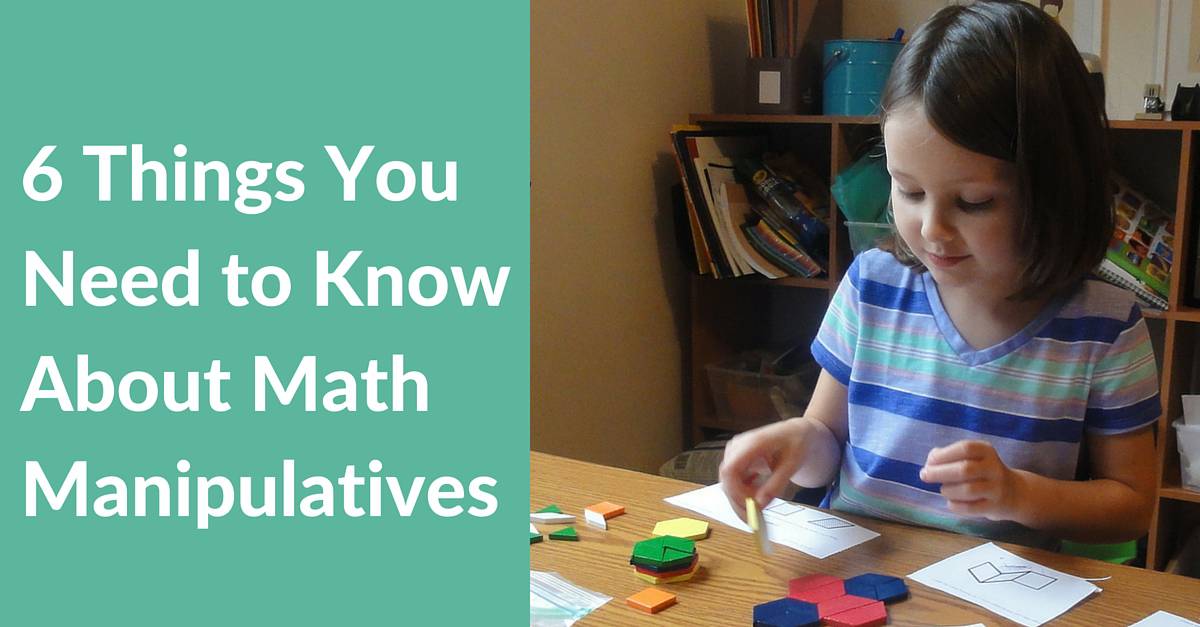 Ever wonder what exactly to do with all the math manipulatives that came with your math curriculum? Or wonder if using more manipulatives would help your kids understand math better? In this article, you’ll learn six facts about math manipulatives so you can use them effectively and confidently with your kids.

 Does your child often write numbers backwards? No need to panic! Here’s how to handle number reversals in homeschool math.